



If you have ever flipped over a deodorant label and wondered what all those ingredients are actually doing, you are asking the right question. When people ask what is natural deodorant made of, they usually want a clear answer, not marketing language. They want to know what goes on their skin every day, how it helps with odor, and whether a cleaner formula can still feel effective.
Natural deodorant is typically built from a short list of purposeful ingredients that each play a practical role. Instead of relying on aluminum, the formula uses plant oils, waxes, powders, and odor-targeting ingredients to help keep underarms fresh and comfortable. That is what makes ingredient transparency so important. You can look at the formula and understand why each part is there.
What is natural deodorant made of in real terms?
At its core, natural deodorant is made of a base, an odor-fighting system, and often a scent component. In Purelygreat deodorants, that starts with ingredients such as coconut oil and candelilla wax in stick formats, baking soda, and corn starch. In cream formulas, you will also see ingredients like vegetable glycerin and natural soda, with charcoal added in charcoal cream options. Essential oils are used in scented varieties, while unscented keeps the formula more minimal.
That combination matters because natural deodorant is not trying to stop the body from functioning. It is designed to support daily odor control with ingredients that absorb moisture, help neutralize odor, and create a texture that is easy to apply. Different formats use the same general idea but balance the ingredients a little differently to suit a stick or a cream.
The base ingredients that give natural deodorant its feel
A natural deodorant formula needs structure before it can do anything else. Oils, butters, and waxes create that structure.
Coconut oil is commonly used because it helps the formula glide onto skin smoothly. It gives deodorant a softer, more spreadable feel and helps blend the dry ingredients evenly. Shea butter supports that same goal. It adds a creamy texture and helps the product feel nourishing rather than chalky.
In stick deodorants, candelilla wax helps hold the product together so it stays solid in the tube and applies cleanly. In cream deodorants, shea butter helps create a thick, scoopable consistency. These ingredients are not there just for texture. They affect how the deodorant performs in everyday use. A formula that feels too hard can drag on skin. One that feels too soft can get messy fast. Good formulation is about finding that middle ground.
The ingredients that help control odor
This is the part most people care about most. Natural deodorant does not use aluminum, so it works differently from antiperspirant. Rather than blocking sweat, it focuses on managing odor.
Baking soda is one of the key ingredients used for that purpose. It helps neutralize odor, which is why it appears across the brand's deodorant formulas. Corn starch also plays an important role by helping absorb moisture, so underarms feel drier through the day.
In cream deodorants, corn starch adds another layer of absorbency and contributes to the smooth, dry finish many people look for. In charcoal cream deodorants, activated charcoal is included as part of the formula, giving that version a distinct profile and texture. Together, these ingredients help create a natural deodorant that feels practical for everyday wear, not just appealing on an ingredient list.
Why natural deodorant ingredients vary by format
One reason shoppers get confused is that not every natural deodorant ingredient list looks the same. That does not always mean one is better than another. Often, it simply reflects the format.
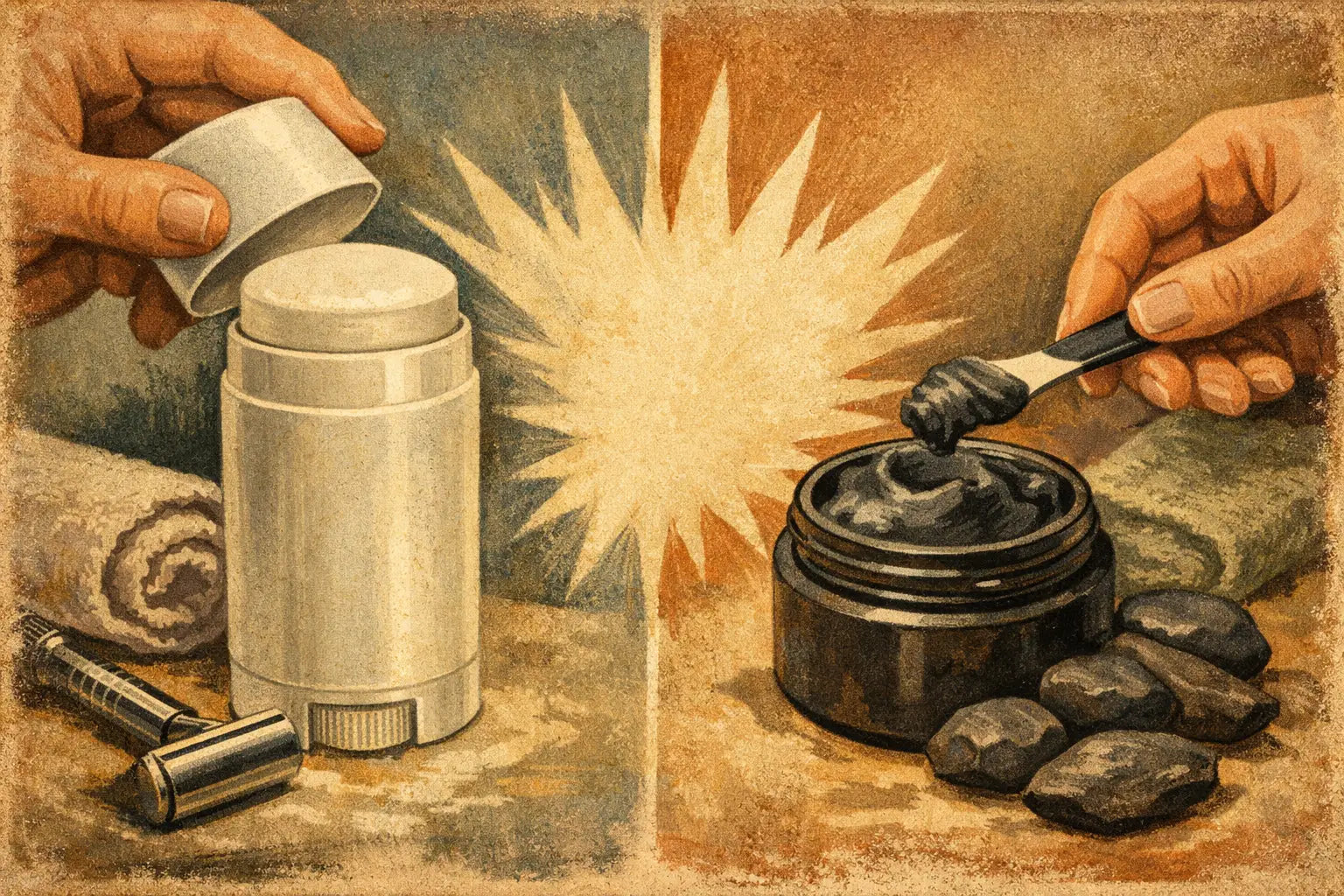
A stick deodorant needs to stay firm enough to twist up and swipe on. That is why a stick formula uses structural ingredients like wax along with oils and powders. A cream deodorant is meant to be applied by hand, so it can be softer and more concentrated in feel. Charcoal cream deodorant builds on that base with charcoal added for a different texture and ingredient profile.
This is why reading the full label matters. When you understand the format first, the ingredient list makes more sense. You are not just looking at a set of ingredients. You are looking at a formula built for a specific kind of application.
What about scent?
Scented natural deodorants usually get their fragrance from essential oils rather than synthetic fragrance blends. In Purelygreat's lineup, that includes options like lavender, tea tree, floral, citrus, patchouli, and spice. These give people room to choose something fresh, earthy, herbal, or more neutral depending on personal preference.
For some shoppers, unscented is the most appealing choice because it keeps the formula simpler. That does not mean it is a different category of product. It still uses the same core odor-control approach, including baking soda. The main difference is that it leaves out the added scent profile.
Scent is personal, so this part really depends on how you use deodorant in the rest of your routine. Some people want a subtle underarm product that does not compete with body care or fragrance. Others want deodorant to add a clean, fresh sensory layer to the day. Natural deodorant can do either, depending on the formula you choose.
What natural deodorant is not made to do
This is where clear expectations help. Natural deodorant and antiperspirant are not the same thing. If you are used to conventional antiperspirants, you may expect a completely dry underarm feel all day. Natural deodorant is not formulated around stopping sweat. It is formulated around odor control and moisture absorption.
That difference is not a drawback for everyone, but it is an important distinction. If your priority is avoiding aluminum while still using a product designed for daily freshness, natural deodorant makes sense. If you expect it to behave exactly like an antiperspirant, the experience may feel different at first.
That is also why ingredients like corn starch and natural soda matter so much. They help support a drier feel without changing the body's natural sweating process. For many people, that balance is the reason to switch.
Why ingredient transparency matters
When shoppers ask what is natural deodorant made of, they are often asking a second question too: can I trust this formula? Clean personal care is easier to choose when labels are readable and claims are grounded in actual ingredients.
That is where simple formulas stand out. You can see the oils, butters, waxes, powders, and essential oils and understand how they work together. That transparency helps people shop by priorities, whether they care most about aluminum-free formulas, vegan-friendly options, EWG Verified products, or a deodorant that fits into a broader low-toxin routine.
It also makes comparison easier within a product line. A stick, a cream, and a charcoal cream may all support the same overall goal, but the ingredient balance tells you how they may feel different on skin and in daily use.
Choosing the right natural deodorant for your routine
The best natural deodorant ingredient list is not just the shortest one. It is the one that matches how you want the product to feel and function day to day.
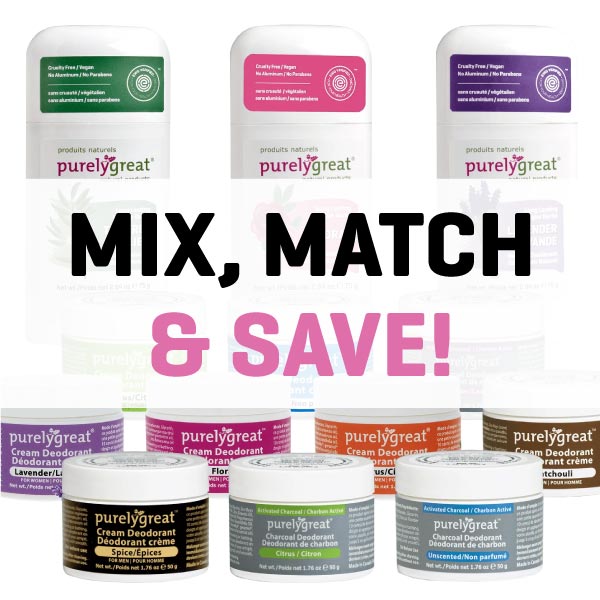
If you like the familiarity of a swipe-on product, a stick can feel like the easiest transition. If you prefer a more hands-on format and do not mind applying with your fingers, a cream may feel more customizable. If you are interested in a formula with charcoal included, a charcoal cream offers that option while still fitting within the same natural deodorant philosophy.
Scent is the other major choice. Herbal, floral, citrus, earthy, spicy, or unscented all offer a different experience, even when the core formula has the same job. Since deodorant is something you use every day, that sensory detail can matter more than people expect.
A natural deodorant should feel like a realistic part of your routine, not a product you have to force yourself to use. That is why straightforward ingredients, multiple formats, and practical scent options matter. They make it easier to embrace a natural lifestyle in a way that feels easy, effective, and everyday wearable.
The more you understand what is in your deodorant, the easier it becomes to choose with confidence. And often, that confidence starts with a simple label, a few well-chosen ingredients, and a product that fits naturally into the way you already live.